
Industry trends
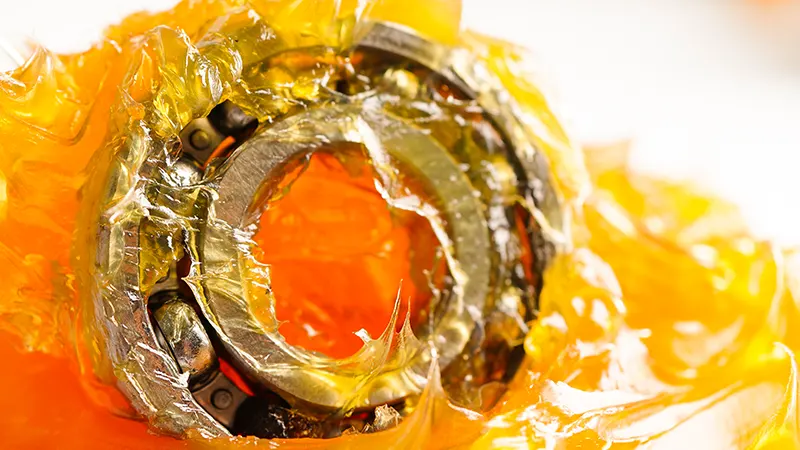
Good use of lubricating oil with few bearing problems

NKFB Bearings
Next-Generation Kinetic Energy Friction EliminatorFor rolling bearings, lubricating oil is not simply an "auxiliary consumable", but a core element to ensure their stable operation and reduce potential faults. The contact surfaces between the rolling elements of bearings and the inner and outer rings bear loads and rotate relative to each other during operation. Without the support of high-quality lubricating oil, problems such as wear, corrosion, and pitting are prone to occur, directly shortening the service life and causing equipment failure. Practice has proven that scientific selection and standardized use of lubricating oil can reduce bearing failures at the root and maintain efficient operation of equipment.
The protective effect of lubricating oil on bearings runs through the entire operation process and is the key to avoiding various common problems. Firstly, lubricating oil can form a uniform oil film on the contact surface between the rolling element and the inner and outer rings, isolating the metal contact surface and converting direct friction into liquid friction between oil films, greatly reducing the friction coefficient and wear degree, and avoiding faults such as contact surface strain and erosion. Secondly, the heat generated during the operation of the bearing can be quickly dissipated through the circulation of lubricating oil, effectively controlling the temperature rise of the bearing, preventing the deterioration of lubricating grease and the decline of bearing material performance caused by high temperature, and avoiding the problem of jamming caused by thermal expansion.
At the same time, lubricating oil can also play a good sealing and protective role, isolating impurities such as dust, iron filings, and water vapor from entering the interior of the bearing, avoiding impurities from entering the contact surface and causing abrasive wear, and delaying the speed of bearing corrosion and oxidation. More importantly, high-quality lubricating oil can buffer the contact stress impact between rolling elements and contact surfaces, reduce stress concentration, suppress the generation and propagation of fatigue cracks, and fundamentally reduce the occurrence of fatigue pitting corrosion, which is the core fault of bearings, avoiding problems such as increased noise, abnormal vibration, and decreased rotational accuracy caused by pitting corrosion.
Good use of lubricating oil requires not only selecting the right type, but also using it in a standardized manner. Both are indispensable. The product selection process needs to be accurately adapted according to the bearing working conditions: for high-speed precision bearings, low viscosity and strong anti-oxidation lubricating oil should be selected to ensure the stability of the oil film and prevent carbon deposition; Bearings under heavy load and impact conditions should use lubricating oil with high viscosity and excellent extreme pressure performance to enhance the oil film bearing capacity; In humid and corrosive environments, rust proof and anti-corrosion lubricating oil should be selected to resist the erosion of water vapor and chemical media. If the selection is improper, even if the oil level is sufficient, it cannot play a protective role and may instead exacerbate bearing failures.
Standardized use and daily management are also key to maximizing the effectiveness of lubricants. The amount of oil needs to be strictly controlled, as too much can cause poor circulation of lubricating oil, heat accumulation and temperature rise, accelerate deterioration, and increase operating resistance; Too little can prevent the formation of a complete oil film, resulting in dry friction on the contact surface. At the same time, it is necessary to regularly check the oil quality status. If discoloration, turbidity, impurities or odors are found in the lubricating oil, it should be replaced in a timely manner to avoid deteriorating the oil and losing its protective function. In addition, before adding lubricating oil, it is necessary to ensure that the bearings and surrounding environment are clean to prevent impurities from entering the interior of the bearings with the oil and causing secondary wear.
The various common problems of bearings are closely related to improper selection and non-standard use of lubricating oil. Whether it is structural damage such as wear, corrosion, pitting, or abnormal operation such as noise, vibration, or jamming, the root cause is often oil film failure or insufficient protection. Therefore, it is important to pay attention to the scientific adaptation and standardized management of lubricating oil, so that every bearing can receive appropriate lubrication guarantee, in order to reduce the occurrence of faults from the source, extend the service life of bearings, reduce equipment operation and maintenance costs, and lay a solid foundation for stable production operation.