
Solution
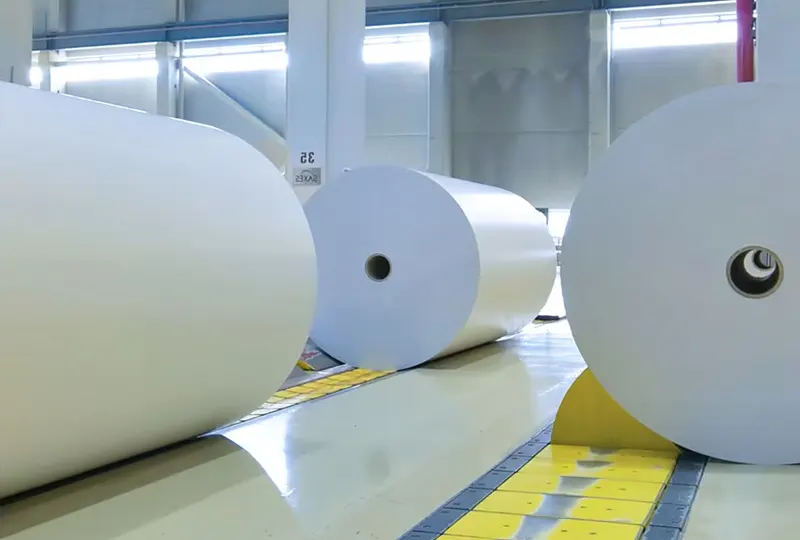
Pulp and paper industry

NKFB Bearings
Next-Generation Kinetic Energy Friction EliminatorThe production process of pulp and paper industry runs through the entire process of raw material processing, pulp making, papermaking, sorting and packaging. The working conditions are generally characterized by humidity, multiple fiber impurities, acid and alkali medium corrosion, and high-speed operation of equipment, which requires extremely high continuity and stability of the production line. As the core transmission component of equipment, bearings, with specialized material selection, sealing structure, and protective design, are suitable for extreme working conditions in various links and have become a key component to ensure the efficient operation of paper production lines.
1、 Core adaptation requirements for bearings in the pulp and paper industry
Compared to conventional industrial scenarios, the special working conditions of the pulp and paper industry have proposed targeted adaptation standards for bearings:
1. Strong corrosion resistance and anti fouling ability: It is necessary to resist the corrosion of acid-base solutions and bleaching agents in the pulp making process, while blocking the invasion of impurities such as pulp fibers, starch, and fillers into the bearing interior to avoid wear and jamming;
2. Moisture resistance and anti condensation: Suitable for high humidity environments in paper making workshops (humidity often reaches over 80%), preventing water vapor from infiltrating bearings and causing internal corrosion, while also addressing the impact of condensation caused by alternating cold and hot temperatures;
3. Suitable for high-speed and smooth operation: Equipment such as paper machines and rewinding machines operate at extremely high speeds, and bearings need to have high-precision and low vibration characteristics to ensure the quality of paper forming and winding;
4. Long lifespan and easy maintenance: Suitable for 24-hour continuous production rhythm, with low failure rate and anti fatigue characteristics, reducing the impact of downtime maintenance on production capacity, and the structural design is easy to maintain and replace on site.
2、 Key application scenarios of bearings in the pulp and paper industry
(1) Pulp preparation process: core adaptation for corrosion resistance and impurity prevention
Pulp preparation involves processes such as wood crushing, steaming, washing, bleaching, etc. The working conditions are highly corrosive and have high impurity content. The corrosion resistance and sealing performance of bearings are particularly critical.
Stainless steel self-aligning roller bearings are widely used in the drive mechanisms of log crushers and slicers. The stainless steel material can resist erosion from humid environments, and its self-aligning characteristics can adapt to equipment installation deviations and material impact vibrations. At the same time, it is equipped with a combination of contact and labyrinth seals to block the intrusion of wood chips and dust, ensuring stable crushing of raw materials by the equipment.
In the transmission parts of equipment such as steamers, washing machines, and bleaching towers, corrosion-resistant ceramic roller bearings or Hastelloy alloy bearings are selected, which can withstand the strong corrosion of high-temperature cooking liquids and bleaching agents. Special lubricating grease configurations can maintain lubrication performance in humid environments, avoiding bearing failure due to corrosion and affecting pulp efficiency.
(2) Paper making process: high-speed and high-precision stable support
Papermaking is the core process of papermaking, involving key units such as the web section, press section, drying section, and calendering section. The equipment operates at high speed and requires extremely high precision. The stability and accuracy of the bearings directly affect the quality of the paper.
In the transmission system of the vacuum roller and press roller in the web section of the paper machine, high-precision cylindrical roller bearings and thrust ball bearings work together: the cylindrical roller bearings have high rigidity and low friction characteristics, adapt to the high-speed operation requirements of the roller body, ensure uniform roller surface speed, and avoid uneven thickness of the paper; The thrust ball bearing can withstand the axial load of the roller body, limit the displacement of the roller body, and is equipped with a waterproof sealing structure to prevent the spray water and pulp fibers from entering the mesh, ensuring stable operation.
In the transmission part of the dryer in the drying section, the bearings need to be adapted to both high temperature (dryer temperature exceeding 100 ℃) and high humidity environments. High temperature resistant stainless steel bearings are selected, matched with high temperature resistant lubricating grease and dust-proof sealing covers, which can resist the high temperature radiation of the dryer and block the humid water vapor and fiber impurities in the workshop, ensuring the uniform rotation of the dryer and achieving efficient drying and shaping of paper.
(3) Organizing packaging process: adaptation requirements for high efficiency and wear resistance
The sorting and packaging process includes processes such as paper calendering, rewinding, slitting, and packaging. The equipment is characterized by high-speed operation and frequent start stop, and has high requirements for the wear resistance and fatigue resistance of bearings.
High precision angular contact ball bearings are used in the winding rollers and paper guide rollers of the rewinder and slitting machine. Their high-speed characteristics are suitable for the high-speed operation requirements of the equipment, and they also have good radial and axial bearing capacity to ensure uniform tension during paper winding and avoid problems such as curling edges and wrinkles; The bearing surface is treated with anti-corrosion coating and equipped with labyrinth seal, which can prevent paper dust and workshop moisture from entering and extend the service life.
In auxiliary equipment such as packers and stackers, spherical bearings with seats are selected. The seat structure is easy to install and debug on site, and the reinforced seal can adapt to the humid environment of the workshop. At the same time, it has a certain impact resistance and is suitable for the frequent start stop requirements of the equipment, ensuring efficient paper packaging and stacking.
3、 The core value of bearings in the pulp and paper industry
For pulp and paper companies, the adaptation and application of specialized bearings are important foundations for ensuring efficient and stable operation of production lines
-Ensuring production continuity: The design features of corrosion resistance, stain resistance, and moisture resistance significantly reduce the probability of bearing failures, minimize production capacity losses caused by equipment downtime, and meet the core requirements of continuous production in the industry;
-Reduce operation and maintenance costs: With its long lifespan and easy maintenance characteristics, it reduces the frequency of bearing replacement and maintenance manpower investment, while also reducing equipment associated losses caused by failures and optimizing production efficiency;
-Improving product quality: The high-precision and low vibration bearing support equipment operates stably, ensuring the precision of various processes such as paper forming, drying, and winding, and helping to improve core quality indicators such as paper thickness uniformity and surface flatness.
From the highly corrosive working conditions of pulp preparation, to the high-speed operation of the papermaking process, and to the efficient adaptation of sorting and packaging, bearings, with their core characteristics of "corrosion resistance, anti fouling, and high precision," build a stable transmission support in the complex working conditions of the pulp and paper industry, providing key guarantees for efficient production and quality upgrading of the industry.